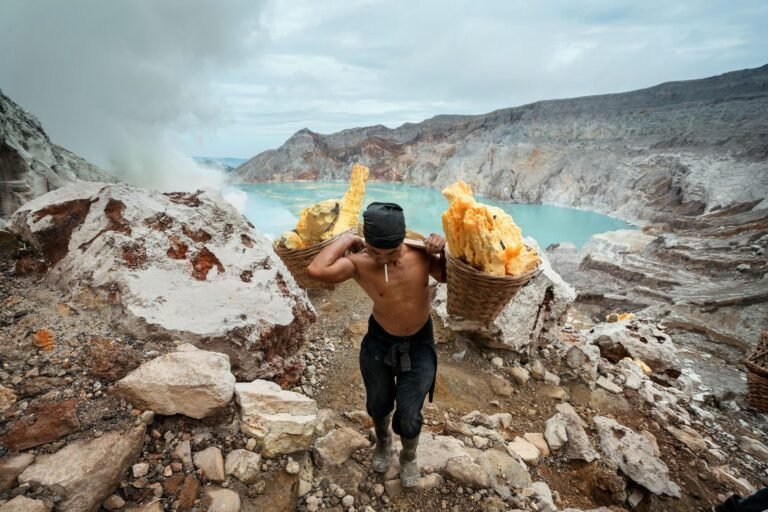
Hidden at the easternmost tip of Java in Banyuwangi and Bondowoso regencies lies Mount Ijen—known locally as Kawah Ijen—one of the most extraordinary volcanic wonders on the planet. Famous worldwide for its surreal electric blue flames that glow in the pitch-black darkness before dawn and its vast, glowing turquoise acid crater lake, a Mount Ijen tour offers a once-in-a-lifetime adventure for nature lovers and trekking enthusiasts.
Whether you are embarking on a midnight hike up the volcanic slopes or standing above the steaming sulfur vents as sunrise illuminates the crater walls, exploring Kawah Ijen is the ultimate grand finale to any East Java overland journey.
How to Travel to Mount Ijen from Yogyakarta, Banyuwangi, Bali, or Bromo
Mount Ijen is well-connected across Java and neighboring Bali, allowing travelers to plan flexible itineraries from multiple starting points:
From Yogyakarta (Train or Overland Tour) Travelers starting in Yogyakarta can easily reach Banyuwangi by taking the direct Sri Tanjung or Wijayakusuma executive train from Tugu Station in downtown Jogja straight to Banyuwangi Kota or Ketapang Station (an approximately 11-to-12-hour scenic rail journey across Java). Upon arrival in Banyuwangi, a local driver picks you up for your midnight transfer to Ijen. Alternatively, many guests book a multi-day overland tour package from a Yogyakarta travel agency, combining temple tours in Jogja with private car transfers to Mount Bromo and Kawah Ijen.
From Banyuwangi Town Banyuwangi serves as the primary gateway to Ijen. Booking a private transfer or guided tour through a local travel agency is the most convenient option. A 4×4 vehicle or sturdy car takes you from downtown hotels in Banyuwangi up the steep, winding mountain road to the Paltuding Base Camp in about 1 to 1.5 hours.
Connecting from Bali (Gilimanuk Ferry) Travelers coming from Bali can take a short 45-minute ferry ride from Gilimanuk Port in West Bali across the Bali Strait to Ketapang Port in Banyuwangi, where a private driver can pick you up directly for your midnight transfer to Ijen.
Overland Route from Mount Bromo Most travelers combine Mount Bromo and Kawah Ijen into a seamless 3-day or 4-day East Java overland tour package, driving approximately 5 to 6 hours eastward from Probolinggo or Lumajang to Banyuwangi.
The Optimal Season and Best Time to Visit Kawah Ijen
While Mount Ijen is open for trekking throughout the year, timing your hike properly ensures optimal visibility and safer trail conditions:
Midnight Trekking Schedule (Start around 1:30 AM to 2:00 AM) To witness the famous blue fire phenomenon, hikers must reach the crater rim before the first light of dawn. Departing from Paltuding Base Camp around 2:00 AM allows you to complete the 3-kilometer uphill trek in time to see the blue flames glowing in the dark, followed by sunrise over the turquoise lake.
Best Time of Year The dry season between April and October offers dry, stable hiking trails, clear night skies, and minimal rainfall, making the steep ascent and descent significantly easier and safer.
Essential Packing List: What to Bring for Your Ijen Trek
Trekking up a high-altitude active sulfur volcano in the middle of the night requires specialized gear and warm clothing:
Professional Gas Mask and Protective Eyewear The volcanic vents at Kawah Ijen emit thick, pungent sulfur smoke. Reputable tour operators always provide industrial-grade respirator gas masks and protective goggles to keep your lungs and eyes safe when wind shifts blow smoke across the trail.
Warm Layers and Windproof Jacket Temperatures at the summit before sunrise can drop between 5°C and 10°C. Wear thermal layers, a warm fleece, a windbreaker jacket, gloves, and a beanie hat.
Sturdy Hiking Shoes The 3-kilometer trail from Paltuding to the crater rim consists of steep, packed volcanic dirt and loose gravel. Good hiking boots or trail sneakers with strong traction are essential, especially for the descent.
Headlamp or Flashlight and Refillable Water Bottle Since the ascent takes place in complete darkness, a hands-free headlamp is vital for illuminating the rocky path, alongside plenty of drinking water to stay hydrated.
Iconic Highlights at Kawah Ijen Volcano
A guided Mount Ijen crater tour showcases several remarkable natural and human spectacles:
The Rare Electric Blue Fire Phenomenon One of only two places on Earth where this natural phenomenon occurs continuously at this scale. Ignited sulfuric gases emerging from cracks in the volcano at temperatures up to 600°C burn with an intense, neon-blue glow visible only in complete darkness.
The Turquoise Acid Crater Lake As dawn breaks, the blue flames fade to reveal the world’s largest highly acidic volcanic crater lake. Stretching nearly one kilometer wide, the steaming water glows in a mesmerizing shade of bright turquoise framed by steep, jagged grey crater cliffs.
The Traditional Sulfur Miners Visitors can witness the extraordinary resilience of local Javanese sulfur miners who work inside the crater, harvesting bright yellow sulfur blocks by hand and carrying heavy baskets weighing 70 to 90 kilograms up the steep crater walls.
Volcanic Safety Guidelines, Health Requirements, and Park News
Mount Ijen is closely monitored by the Center for Volcanology and Geological Hazard Mitigation (PVMBG) and the Natural Resources Conservation Agency (BBKSDA East Java):
Mandatory Health Certificate Requirement Under current national park regulations implemented by BBKSDA East Java, all domestic and international visitors trekking to Kawah Ijen are required to present a valid medical health certificate (Surat Keterangan Sehat) issued by a licensed doctor or clinic within days prior to the hike. Reputable tour operators assist guests in arranging quick medical screenings in Banyuwangi before departure.
Latest Volcanic Status and Crater Rim Access PVMBG continuously monitors seismic activity and volcanic gas concentrations at Kawah Ijen. During normal status (Level I / Normal), visitors are permitted to hike up to the crater rim viewpoint. Depending on real-time gas concentrations and wind directions, park rangers regulate access down into the inner crater basin to ensure maximum visitor safety. Always follow instructions from your certified local guide and park authorities.
Nearby Attractions Around Banyuwangi
Extend your stay in Banyuwangi to explore East Java’s lush coastal and forest sanctuaries:
Djawatan Forest (De Djawatan Benculuk) A mystical grove of centuries-old giant trembesi trees covered in lush green ferns and moss, resembling an enchanted woodland straight out of a fantasy film.
Baluran National Park Often called the “Little Africa of Java,” this vast savanna reserve north of Banyuwangi is home to wild banteng cattle, Javanese deer, peacocks, and scenic views of Mount Baluran.
Red Island Beach (Pulau Merah) A picturesque crescent beach featuring soft white-reddish sand and gentle waves, ideal for relaxing afternoon walks or beginner surfing sessions after your mountain trek.
Begin Your Kawah Ijen Adventure Today
From the glowing neon-blue flames in the midnight darkness to the breathtaking turquoise crater lake at sunrise, Kawah Ijen offers an unforgettable encounter with raw volcanic beauty. Contact our team of travel specialists today to start customizing your Mount Ijen tour and East Java adventure!